


.png)
April 17th, 2026
The numbers are in. They demand attention. The U.S. EPA's FY2025 Enforcement and Compliance Annual Results Report reveals an agency operating at peak velocity: more cases closed, more defendants charged, and more dollars collected than in nearly a decade. For oil and gas operators, the message is clear — non-compliance is an ongoing financial risk, and the cost of looking away has never been higher.
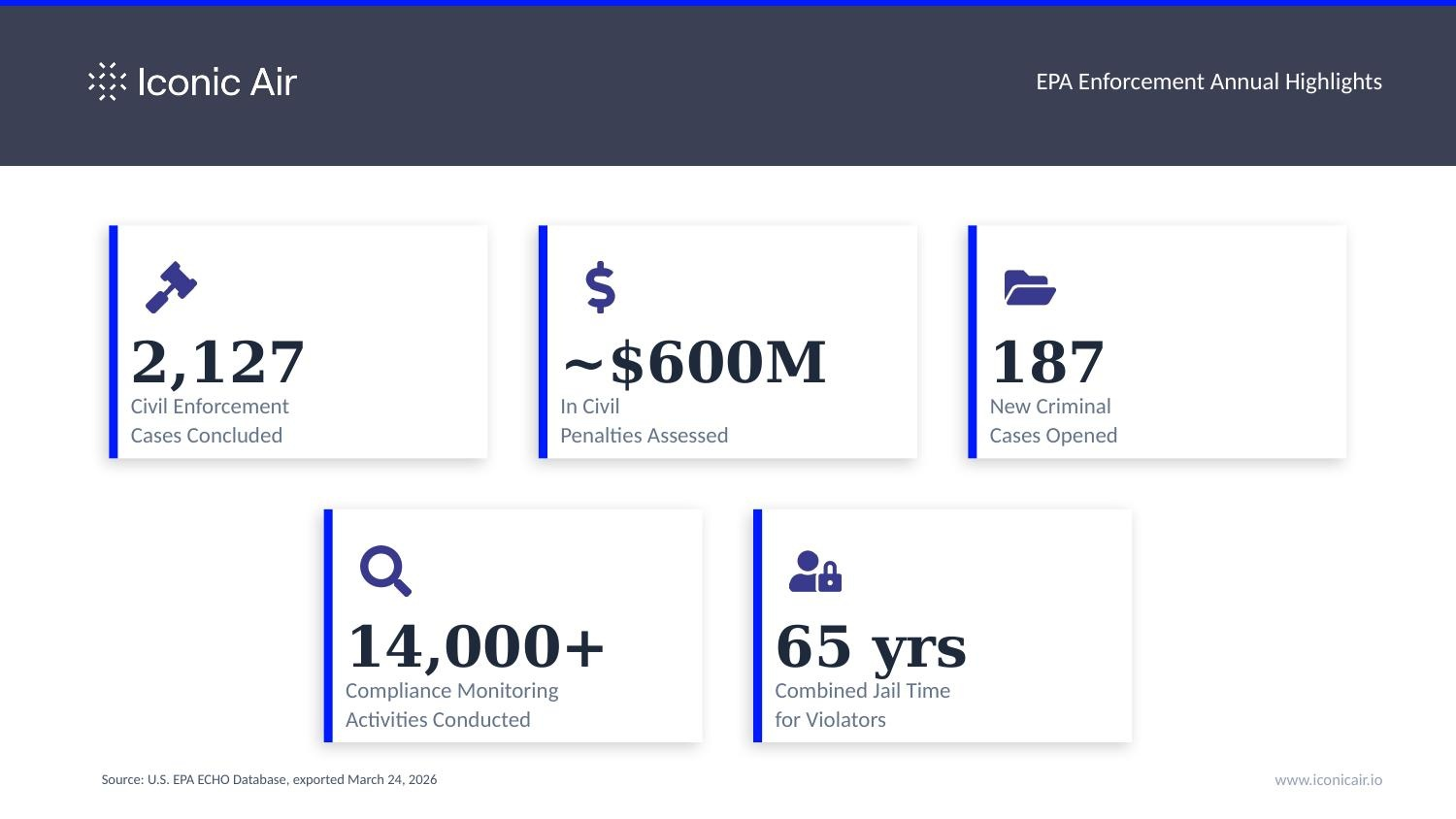
EPA concluded 2,127 civil enforcement cases in FY2025 — the highest volume in nine years. The agency assessed approximately $600 million in civil penalties, conducted over 14,000 compliance monitoring activities, and handed down a staggering 65 years of combined jail time to environmental violators. On the criminal side, 187 new cases were opened and 156 defendants were personally charged — the most since FY2016. This is not a cyclical blip. It is a sustained escalation.
"This past year, EPA's enforcement and compliance assurance program demonstrated that this Administration will ensure compliance with the law even as it furthers economic growth."
— Jeffrey Hall, EPA's Office of Enforcement and Compliance Assurance
Perhaps the most striking data point for the sector: 8 of the top 10 federal Clean Air Act penalties in FY2025 involved the petroleum and natural gas value chain — including compressor stations, production wells, and refineries. Companies like XTO Energy, Newfield Exploration, Targa Resources, Hilcorp, and Ascent Resource all appear on the penalty chart. This is not coincidence; it is a reminder that in the era of "drill, baby, drill," non-compliance with the Clean Air Act is a substantial financial and operational risk.

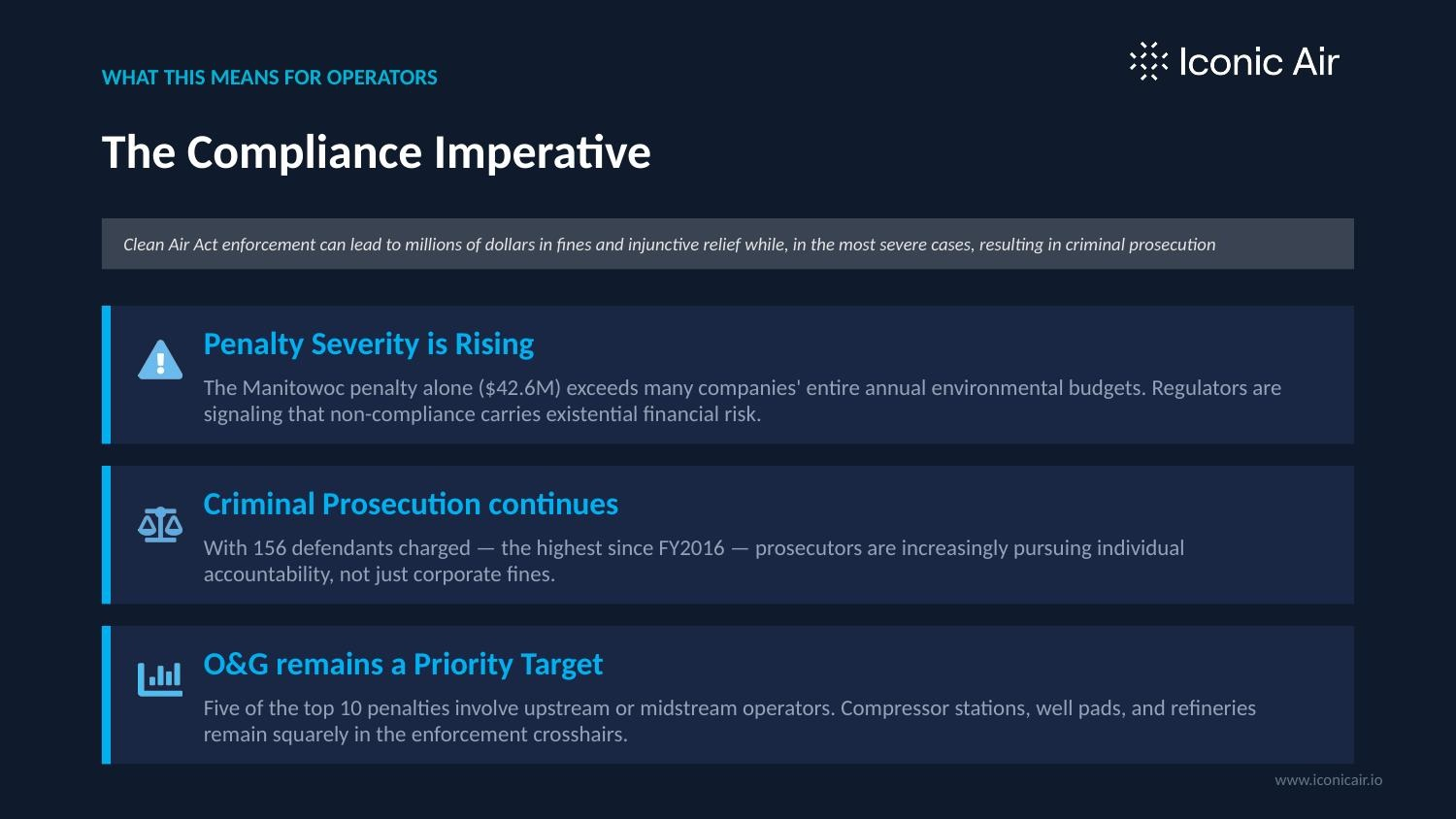
The FY2025 data sends three unambiguous signals to the oil and gas industry. First, penalty severity is rising — single enforcement actions now routinely exceed tens of millions of dollars, with The Manitowoc Company topping the list at $43M. Second, criminal prosecution is accelerating, with prosecutors pursuing individual employees, not just the companies they work for. Mid-level site managers and field supervisors have faced personal criminal liability for falsified monitoring reports and unreported emissions releases. Third, with EPA's renewed focus on "Restoring American Energy Dominance" as a strategic pillar, operators should expect both streamlined permitting and heightened enforcement accountability — a dual mandate that requires proactive compliance programs, not reactive ones.
Federal enforcement posture on methane has not gone unmatched at the state level. Several energy-producing states are independently tightening requirements on oil and gas air emissions — creating a patchwork of obligations that companies must navigate regardless of federal posture.
TCEQ and the Railroad Commission jointly oversee oil and gas air compliance. The RRC's FY2025 Enforcement Plan expanded public transparency on inspections. TCEQ is drafting a state plan for existing oil and gas facilities under the 2024 EPA methane rule.
Colorado adopted a first-in-the-nation rule requiring midstream oil and gas facilities to meet greenhouse gas emissions limits by 2030. Upstream operators must comply with annual methane intensity verification, and the state requires instrument-based leak detection at all facilities.
DOJ and EPA settlements with Matador Production and three natural gas processors targeted operations across 12 states including New Mexico. Companies paid $9.25M in civil penalties and funded emissions mitigation projects.
⚠ Bottom line for O&G operators: With EPA running at its highest enforcement tempo in nearly a decade, a decision to lift your foot off the gas may result in material penalties. Transparent, audit-ready documentation and ongoing emissions monitoring are no longer best practices — they are essential shields against existential financial and legal exposure.
EPA received 538 voluntary disclosures covering violations at 957 facilities under its self-disclosure policies — a sign that proactive operators are already adjusting. Companies that invest in continuous monitoring platforms, structured compliance audits, and transparent reporting are far better positioned to avoid the enforcement actions now landing on the front pages. The FY2025 report makes one thing clear: the EPA is not slowing down, and neither should your compliance program.
Dive deeper into EPA's official findings, including Superfund updates, criminal case breakdowns, and the agency's five strategic pillars for 2025.
We're excited to show you how Iconic Air can help your company mitigate climate risk and ensure access to capital.
Schedule a Demo


